Short answer: No procedure is risk-free. Smartraveller’s overall advice for India is “exercise a high degree of caution” due to the threat of terrorism and crime and the risk of civil unrest, with higher levels in some areas. Medical facilities in major cities have adequate treatment standards, but care can be very limited or unavailable in remote and rural areas, and serious illness may require expensive evacuation (Smartraveller (opens official site)).
Risks and limitations to understand first
| Risk | What it means |
|---|---|
| Variable standards and access | Adequate care in many major-city facilities; very limited or unavailable care in remote and rural areas (Smartraveller (opens official site)). |
| Evacuation cost | Serious illness or injury may require medical evacuation, which can be very expensive (Smartraveller (opens official site)). |
| No reciprocal free care | Tourists pay for all medical care (Smartraveller (opens official site)). |
| No Medicare | Medicare doesn’t cover you overseas, and basic travel insurance rarely covers medical tourism (Smartraveller (opens official site)). |
| Infectious disease and pollution | Malaria, dengue, food- and waterborne illness, and severe air pollution (especially in winter) are significant risks (Smartraveller (opens official site)). |
| Problems after you get home | Complications may only show up back in Australia (Smartraveller (opens official site)). |
Current travel advice
As of 23 October 2026, Smartraveller advises exercise a high degree of caution in India overall. You need a valid visa or OCI card, and you must complete the online e-Arrival Card up to 3 days before travel. An online health self-declaration may also be required before arrival (Smartraveller (opens official site)). See the India destination guide.
Check the practitioner
- Doctors: National Medical Commission Indian Medical Register (opens official site). Ask for full name, registration number and State Medical Council details in writing.
Then use how to choose a surgeon overseas and questions to ask before you book.
Check the facility
Accreditation applies to the facility, not the surgeon, and doesn’t guarantee outcomes.
Emergencies
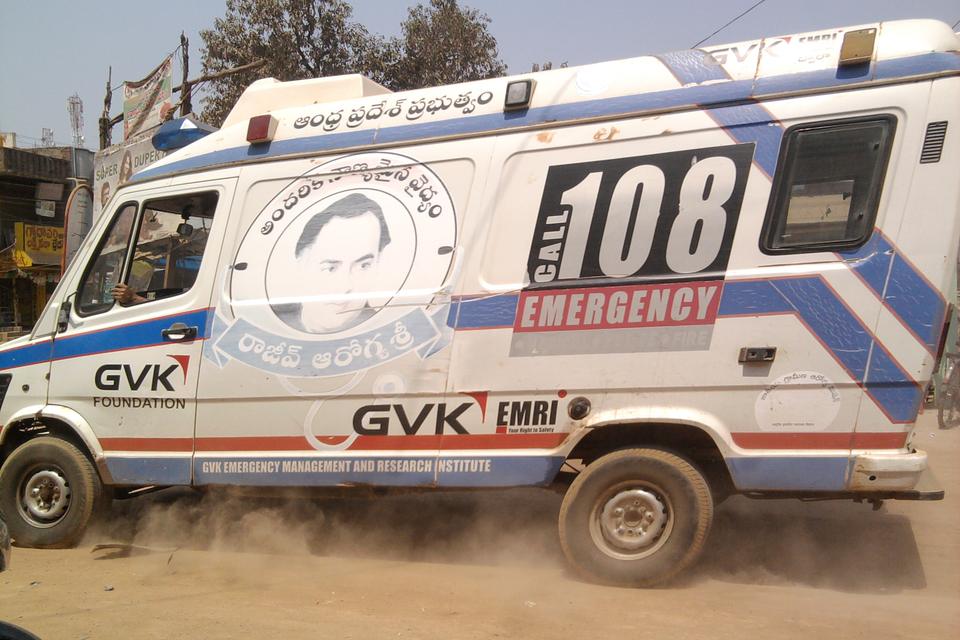
- Dial 112 for emergencies (national number linking police, fire and ambulance). Confirm current numbers on Smartraveller (opens official site) before you travel.
- Consular Emergency Centre: +61 2 6261 3305, 24 hours (Smartraveller (opens official site)).
If something goes wrong: complications after surgery overseas.
Money and insurance
- Travel insurance for surgery and medical tourism insurance
- Does Medicare cover treatment overseas?
- Using an agency? How to choose a medical travel agency
Procedures in India
Australians often research orthopaedic and cardiac surgery. Overview: medical tourism in India. Related reading: knee replacement and hip replacement.
The flight home
Plan recovery time before flying: flying after surgery and DVT risk. Then aftercare in Australia.
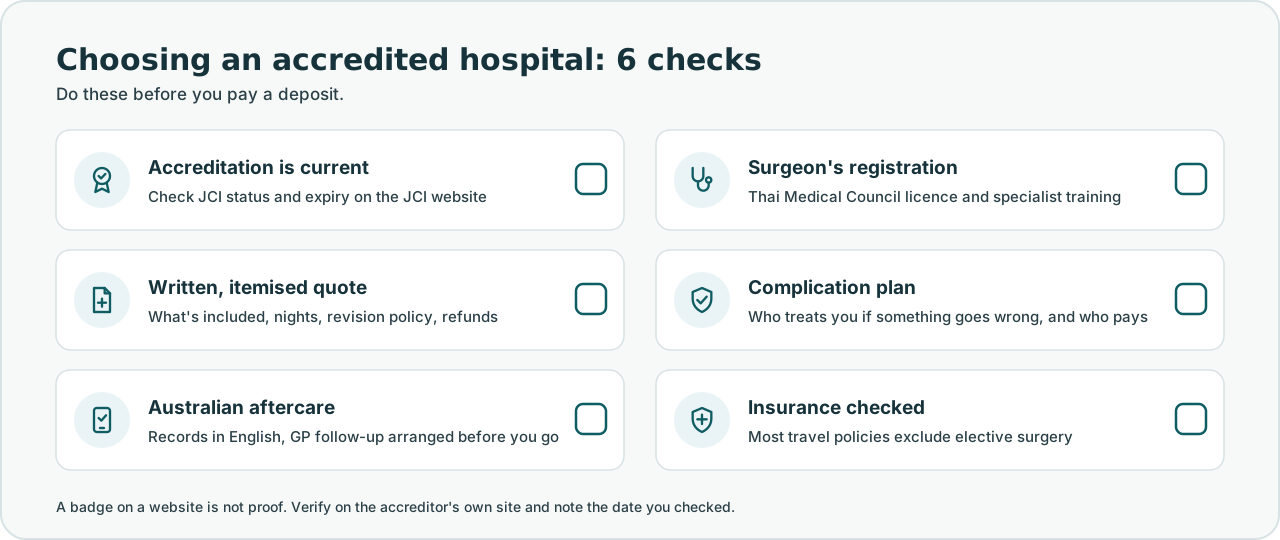
Practical safety checklist before you book
- Read the live Smartraveller (opens official site) country advice close to departure
- Confirm clinician registration on the local regulator’s official tool
- Confirm facility accreditation on the issuer’s directory and date-stamp the check
- Get insurance answers in writing for your named procedure (travel insurance for surgery)
- Plan English records, aftercare in Australia and a complications pathway before you fly
- Soften destination marketing claims - accreditation and aftercare beat “medical hub” slogans
Related: destinations hub · choosing a surgeon · complications overseas.
Documents and aftercare to request before you fly home
Ask for copies in English where possible:
- Operation or treatment notes and the named clinician’s details
- Implant, graft, device or laboratory material details if relevant
- Medication list, wound-care instructions and warning signs that need urgent care
- Written fit-to-fly advice and any activity restrictions
- Contact path for the overseas team if a problem appears after you leave
Bring those records to your Australian GP promptly. See aftercare in Australia, revision surgery in Australia and complications after surgery overseas.
Medicare does not cover treatment overseas (Department of Health (opens official site)). Basic travel insurance rarely covers medical tourism (Smartraveller (opens official site)).
How to compare destinations without picking a winner
Search phrases that ask for a single winning destination usually hide the real decision:
- The named clinician’s training and who performs each step
- Facility accreditation verified on the issuer’s directory
- Fly-safe recovery time and whether you can stay long enough
- Revision policy and Australian aftercare access
- Total trip cost, not a procedure-only marketing figure
This site does not crown a best or cheapest country. Use destination hubs, safety guides and cost pages together, then decide with your own clinician.
Frequently asked questions
Is it safe to have surgery in India?
All surgery carries risk. Safety depends on the practitioner, facility, procedure and aftercare. Check NMC registration yourself. Smartraveller advises a high degree of caution overall.
What’s the Smartraveller level for India?
“Exercise a high degree of caution” overall, with higher levels in some areas. Check the latest advice.
How do I check an Indian doctor’s licence?
Use the National Medical Commission Indian Medical Register with the doctor’s full name and registration details.
What number do I call in an emergency in India?
112 (confirm on Smartraveller before travel).
Will the Australian embassy recommend a hospital?
Consular staff can give lists of doctors and hospitals but can’t pay bills or recommend surgeons.
Is accreditation a safety guarantee?
No. It is one check among many. Outcomes still depend on the clinician, procedure and your recovery plan.
Does Medicare cover emergencies in this destination?
Medicare does not cover you overseas. Check whether any reciprocal agreement applies and still arrange suitable travel insurance.
What records should I bring home?
Operation notes, implant or device details if relevant, medication lists and written fit-to-fly advice in English where possible.
When should I involve an Australian GP?
Before you travel if you can, and promptly after you return with your overseas records.
Sources
All accessed 24 October 2026.
- Smartraveller, India: https://www.smartraveller.gov.au/destinations/asia/india
- Smartraveller, Medical tourism: https://www.smartraveller.gov.au/medical-tourism
- Smartraveller, Sun, sand and cosmetic surgery: https://www.smartraveller.gov.au/news-and-updates/sun-sand-and-surgery
- National Medical Commission, Indian Medical Register: https://nmc.org.in/information-desk/indian-medical-register
- Joint Commission International, Find accredited international organisations: https://www.jointcommission.org/en/about-us/recognizing-excellence/find-accredited-international-organizations
Disclaimer: The information on medicaltourism.com.au is general in nature. It isn’t medical, legal, financial or insurance advice and doesn’t take your personal circumstances into account. Travel advice changes: always check Smartraveller before you go. See our editorial policy, medical disclaimer and how we make money.