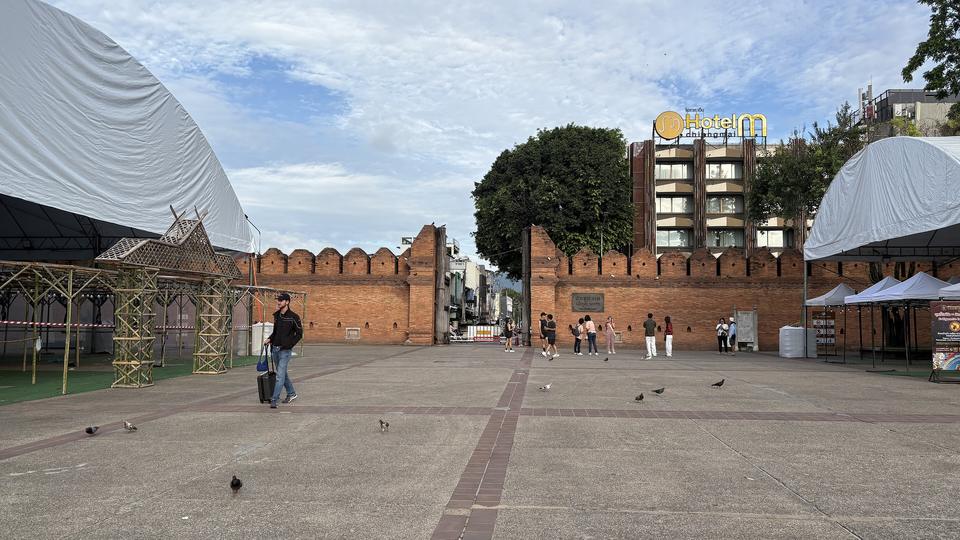
Short answer: Chiang Mai is northern Thailand’s main city for private hospitals and dental clinics. Smartraveller flags high air pollution, particularly in Bangkok and Chiang Mai, which can reach hazardous levels and worsen asthma and other breathing problems (Smartraveller (opens official site)). Many Australians look at Chiang Mai for dental work rather than major surgery. Medicare doesn’t cover treatment overseas. For medical emergencies in Thailand, call 1669.
Risks and limitations to understand first
| Risk | What it means for you |
|---|---|
| Air pollution | Smartraveller says Thailand has high levels of air pollution, particularly in Bangkok and Chiang Mai, and that it can reach hazardous levels and worsen asthma, sinus and bronchial conditions (Smartraveller (opens official site)). Talk to your doctor if you have a lung condition, especially if you’re having a general anaesthetic. |
| Paying upfront | Hospitals and doctors often need to confirm your insurance before they treat you, even in an emergency. Otherwise you may need to pay cash upfront, and costs can be very high (Australian Embassy Thailand (opens official site)). |
| Complications after you leave | Problems can surface after the flight home. See what to do if surgery overseas goes wrong. |
| Clots on the flight home | Journeys from Australia to Chiang Mai usually involve a connection via Bangkok or another hub. See how long after surgery you can fly and DVT risk when flying after surgery. |
| Dental follow-up | The ADA advises Australians to have elective dental treatment in Australia; overseas work can be hard to repair without full records (ADA (opens official site)). |
| Limited recourse | Ahpra can’t act on practitioners registered only in Thailand. |
| Insurance gaps | There’s no reciprocal health agreement between Australia and Thailand, and basic travel insurance rarely covers medical tourism (Smartraveller (opens official site)). See travel insurance for surgery overseas. |
Checking a Chiang Mai doctor or dentist
We don’t rank or recommend hospitals or clinics. These official tools let you check facts for yourself:
- Doctors: the Medical Council of Thailand’s Check MD register (opens official site).
- Dentists: the Dental Council of Thailand’s Find Dentist register (opens official site).
- National hospital accreditation: HA Thailand’s certificate status list (opens official site), which shows expiry dates.
- International accreditation: JCI’s accredited organisations search (opens official site). See also our guide to JCI-accredited hospitals in Thailand.
- Hospital contact list: the Australian Embassy publishes a list of hospitals in Thailand (opens official site), compiled from public information. DFAT says it doesn’t endorse any listed service.
Accreditation applies to a facility, not an individual practitioner, and it never guarantees a result. For a full checklist, see how to choose a surgeon overseas and questions to ask before you book.
Common procedures in Chiang Mai
Australians often consider Chiang Mai for dental care. Prices aren’t published yet (Price on request, get quotes from clinics). Each guide below covers risks, recovery and what to check:
- Dental: dental implants in Thailand, veneers in Thailand, All-on-4 in Thailand and veneer costs in Thailand
- Broader Thailand procedures: plastic surgery in Thailand, LASIK in Thailand
- Country hub: medical tourism in Thailand
For costs, start with the relevant Thailand cost pages. Prices are a guide only, not a quote. The ADA still advises elective dental treatment in Australia (ADA (opens official site)).
Getting there and recovering
| Item | What to know |
|---|---|
| Flights | Most Australian travellers connect via Bangkok (or another hub) to Chiang Mai International Airport (CNX). Non-stop Sydney to Bangkok takes about 9 hr 20 min to 9 hr 50 min (2LNR (opens official site)). Foreign passengers must present a passport for domestic flights within Thailand (Smartraveller (opens official site)). |
| Entry | Thailand revoked its 60-day visa exemption from 15 September 2026. Australians can still get visa-free entry for tourism (generally up to 30 days under the revised scheme), and Thailand offers medical-treatment visas (Smartraveller (opens official site); Thai Government PRD (opens official site); Thailand e-Visa (opens official site)). Complete the free Thailand Digital Arrival Card within 3 days before arrival (Smartraveller (opens official site)). See the Thailand hub for details. |
| Where to stay | Stay close to your clinic or hospital so you can get to check-ups easily. |
| Air quality | Check the World Air Quality Index (opens official site) during your stay, as Smartraveller suggests (Smartraveller (opens official site)). Haze seasons can be severe in northern Thailand. |
| Medicines | Check that any medicine you bring is legal in Thailand. The Embassy suggests contacting the Royal Thai Embassy in Canberra (Australian Embassy Thailand (opens official site)). |
| Records | Leave with your treatment notes, discharge summary, X-rays and implant or material details in English. |
If something goes wrong
- Ambulance / medical emergency in Thailand: 1669. Tourist police: 1155 (Smartraveller (opens official site)).
- Australian Embassy Thailand (Bangkok): 181 Soi ArunMcKinnon, Wireless Road, Lumphini, Pathumwan, Bangkok 10330. Phone +66 2 344 6300 (Australian Embassy Thailand (opens official site)).
- What consular staff can’t do: pay bills, lend money or recommend surgeons (Smartraveller (opens official site)).
- Back home: see your GP or dentist promptly with your records, or call 000 in an emergency. See aftercare in Australia and revision surgery in Australia.
Frequently asked questions
Is it safe to have dental work in Chiang Mai?
All dental procedures carry risk. In Chiang Mai it depends on the dentist, the clinic, the procedure and your aftercare plan. Check the dentist’s licence and read our Thailand safety guide. The ADA advises elective dental treatment in Australia.
Does air pollution matter if I’m having treatment?
It can. Air pollution in Chiang Mai can reach hazardous levels and can worsen asthma and other breathing conditions. Ask your doctor before you travel, especially before a general anaesthetic.
What is the emergency medical number in Thailand?
Call 1669 for medical emergencies. Tourist police: 1155.
Will a Chiang Mai hospital treat me without insurance?
Hospitals often need to confirm your insurance before they treat you, even in an emergency. If they can’t, you may have to pay cash upfront.
Chiang Mai or Bangkok for treatment?
Neither is better overall. Compare the individual practitioner and facility, and how easily you can get to follow-up appointments. See our Bangkok guide and Phuket guide.
What changed with Thai visas on 15 September 2026?
The previous 60-day visa exemption was revoked. Australians are generally eligible for a revised 30-day tourism visa exemption - confirm current rules on Smartraveller before you book a long recovery stay.
Sources
All accessed 23 October 2026.
- Smartraveller, Thailand: https://www.smartraveller.gov.au/destinations/asia/thailand
- Smartraveller, Going overseas for a medical procedure: https://www.smartraveller.gov.au/medical-tourism
- Australian Embassy Thailand, Medical information: https://thailand.embassy.gov.au/bkok/Medical_Information.html
- Australian Embassy Thailand, Consular services: https://thailand.embassy.gov.au/bkok/Consular_Services.html
- Thai Government PRD, Revision of Thailand’s visa exemption schemes: https://thailand.prd.go.th/en/content/category/detail/id/48/iid/538547
- Thailand e-Visa, Medical treatment: https://www.thaievisa.go.th/visa/medical-treatment
- ADA, Elective overseas dental treatment: https://ada.org.au/policy-statement-2-2-6-elective-overseas-dental-treatment
- Medical Council of Thailand, Check MD: https://checkmd.tmc.or.th/En
- Dental Council of Thailand, Find Dentist: https://dentalcouncil.or.th/FindDentist?lang=en
- 2LNR, Sydney to Bangkok route: https://2lnr.com/routes/syd-bkk
- World Air Quality Index: https://waqi.info/
Disclaimer: The information on medicaltourism.com.au is general in nature. It isn’t medical, legal, financial or insurance advice and doesn’t take your personal circumstances into account. Talk to a registered health practitioner before deciding on any procedure. See our editorial policy, medical disclaimer and how we make money.